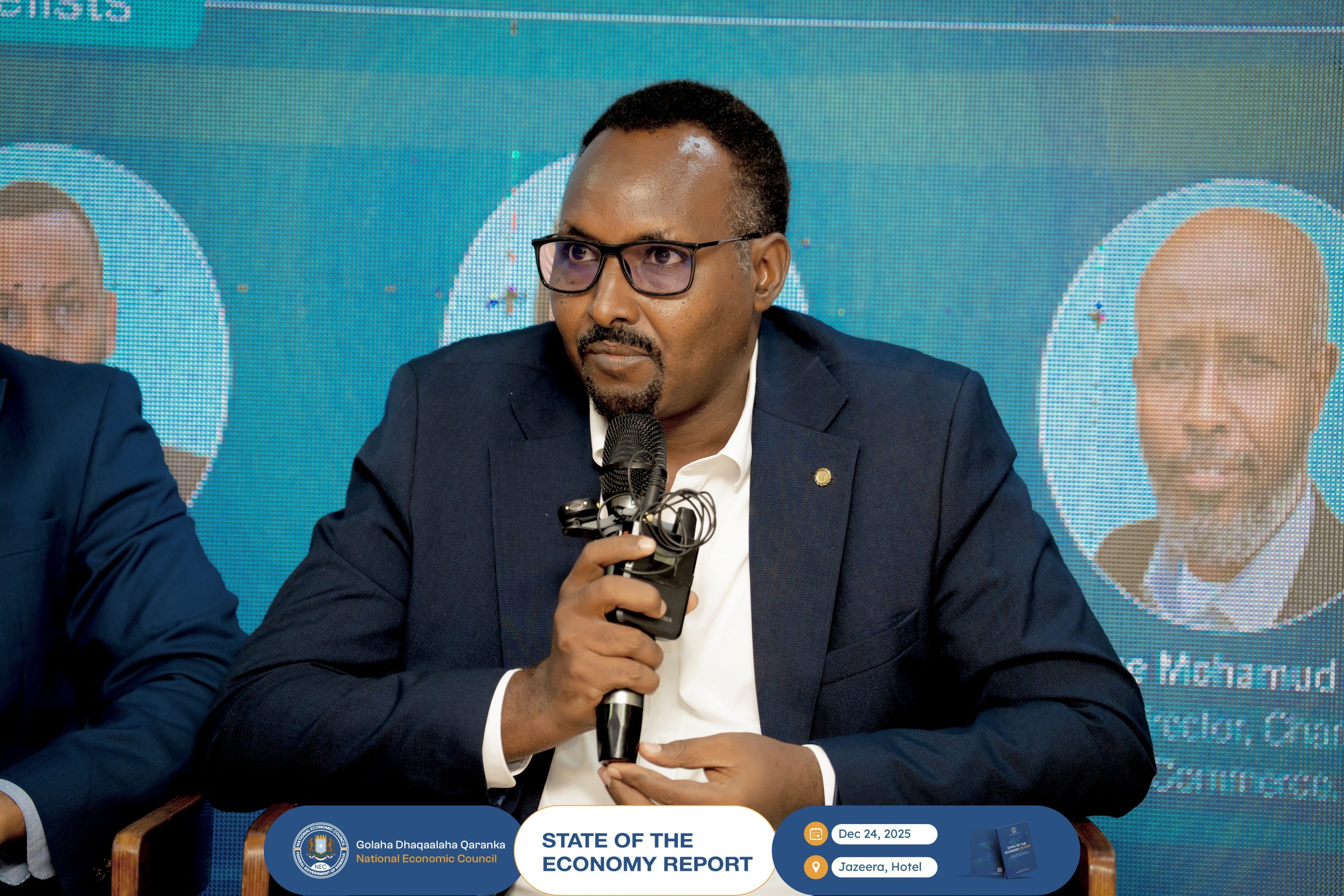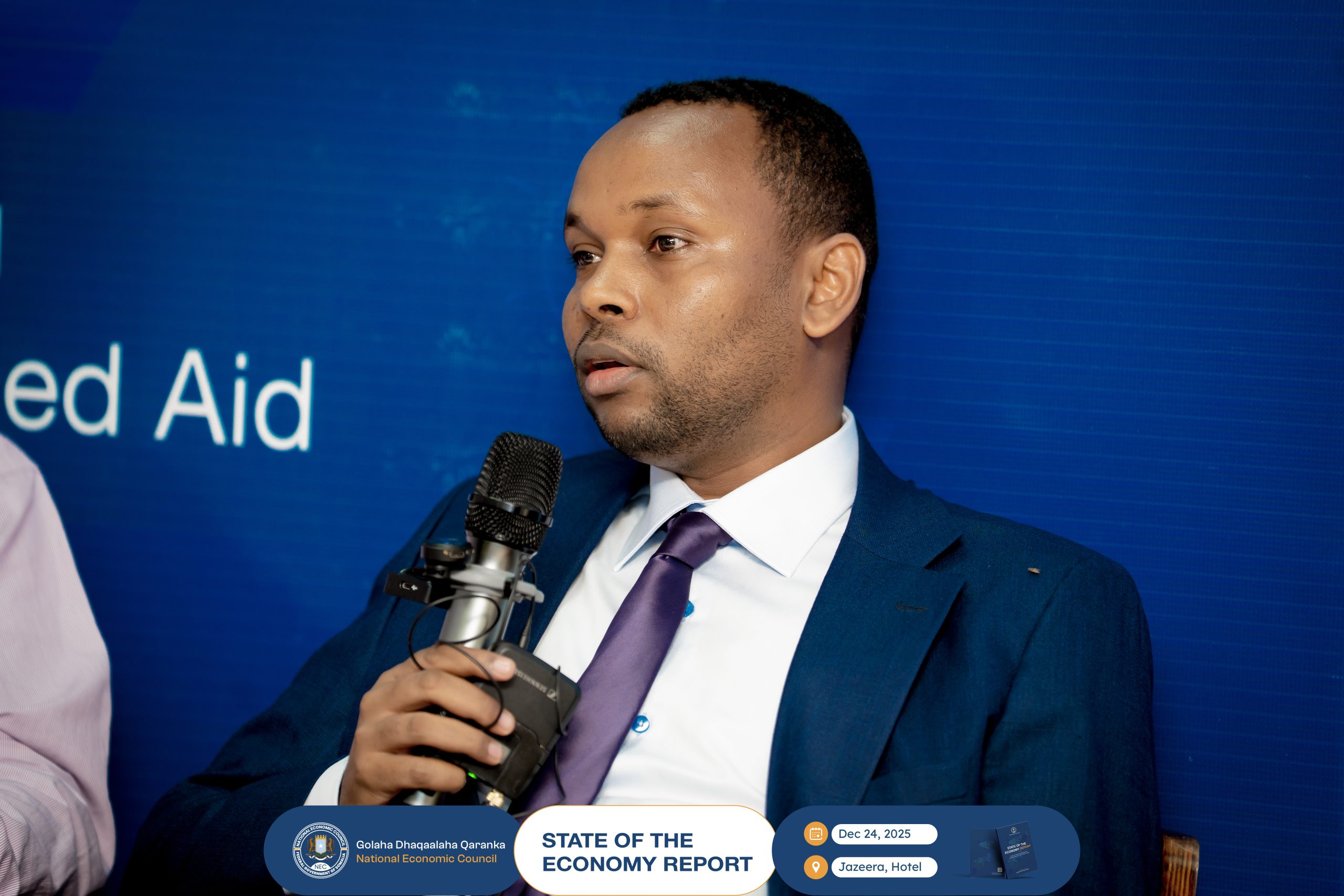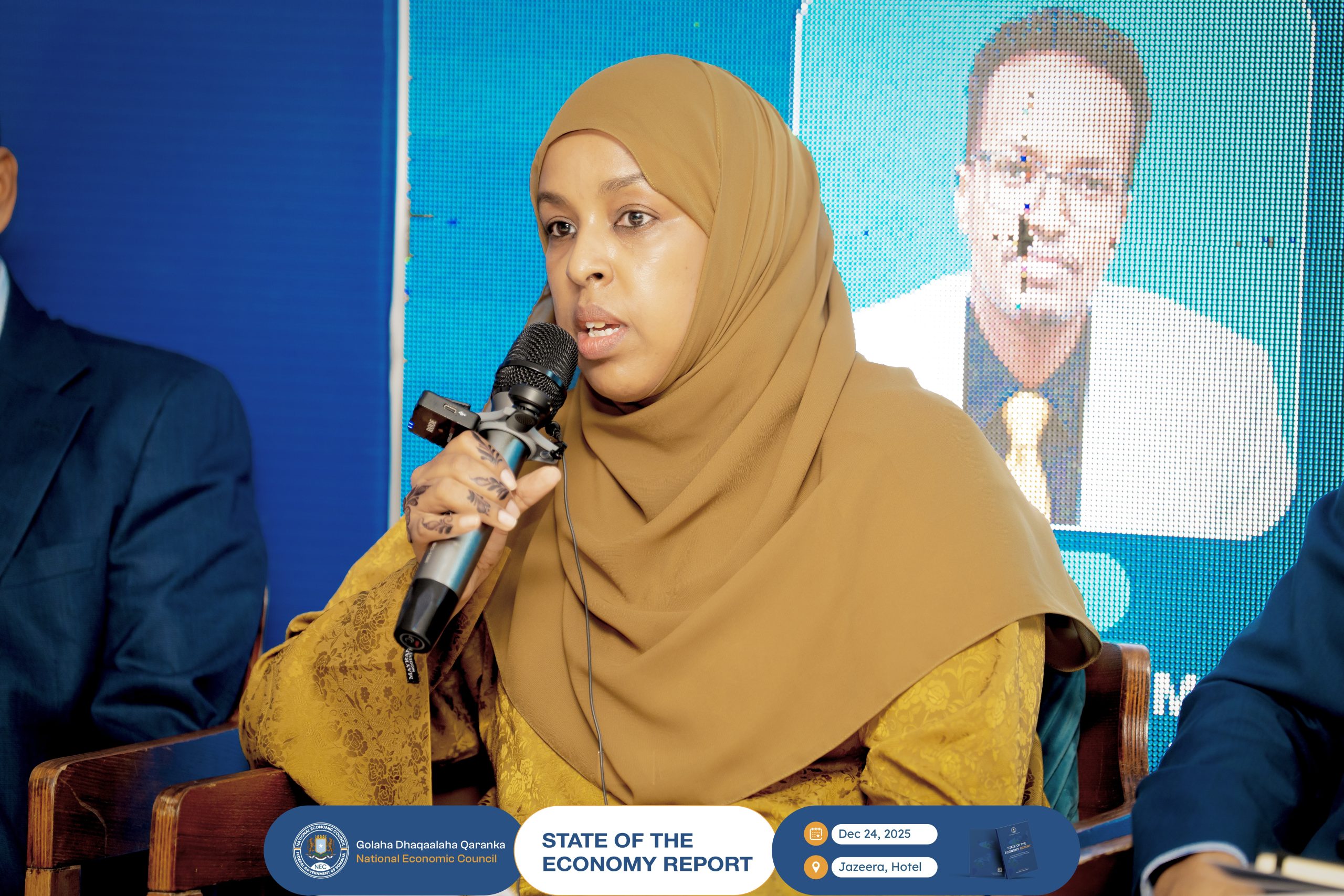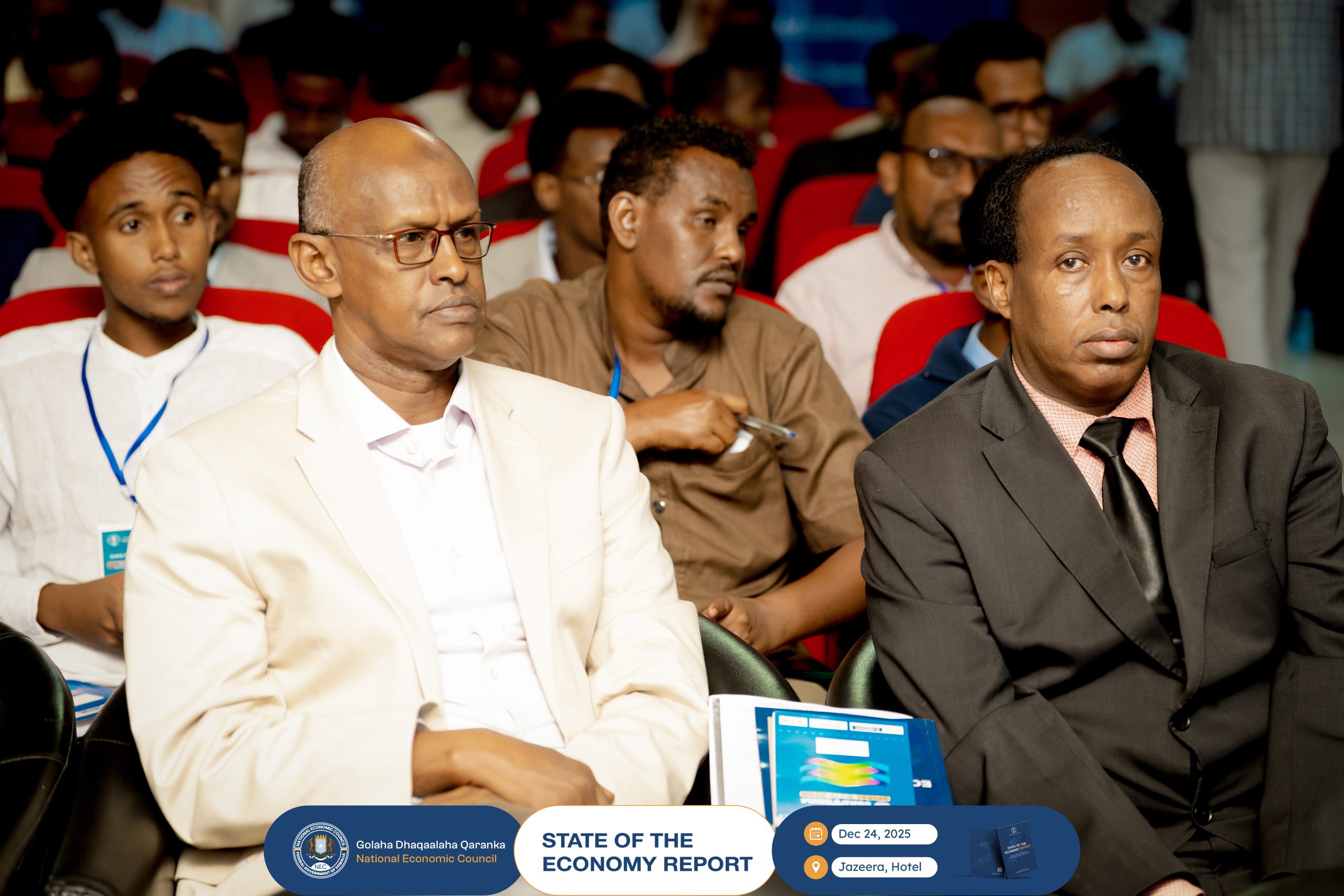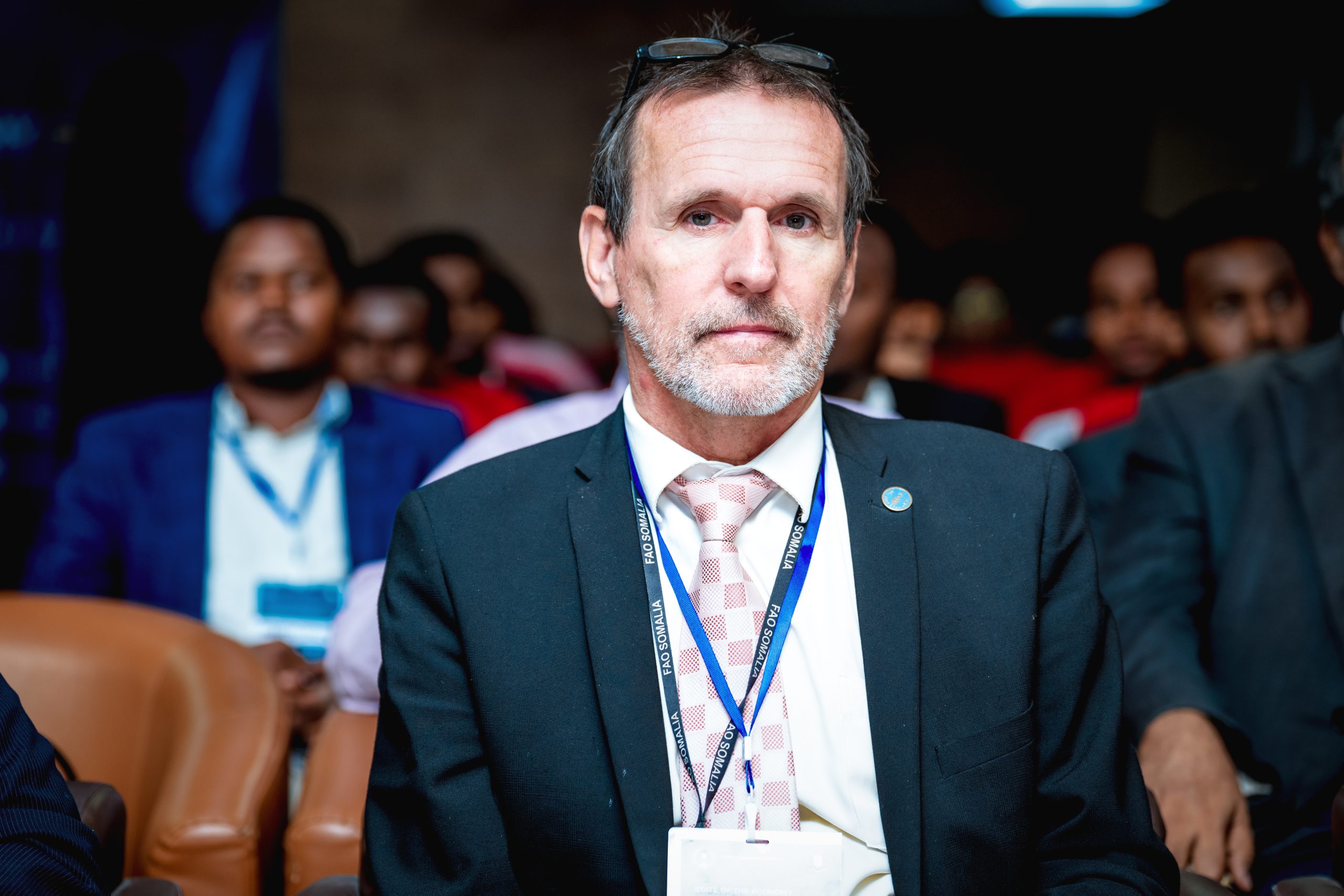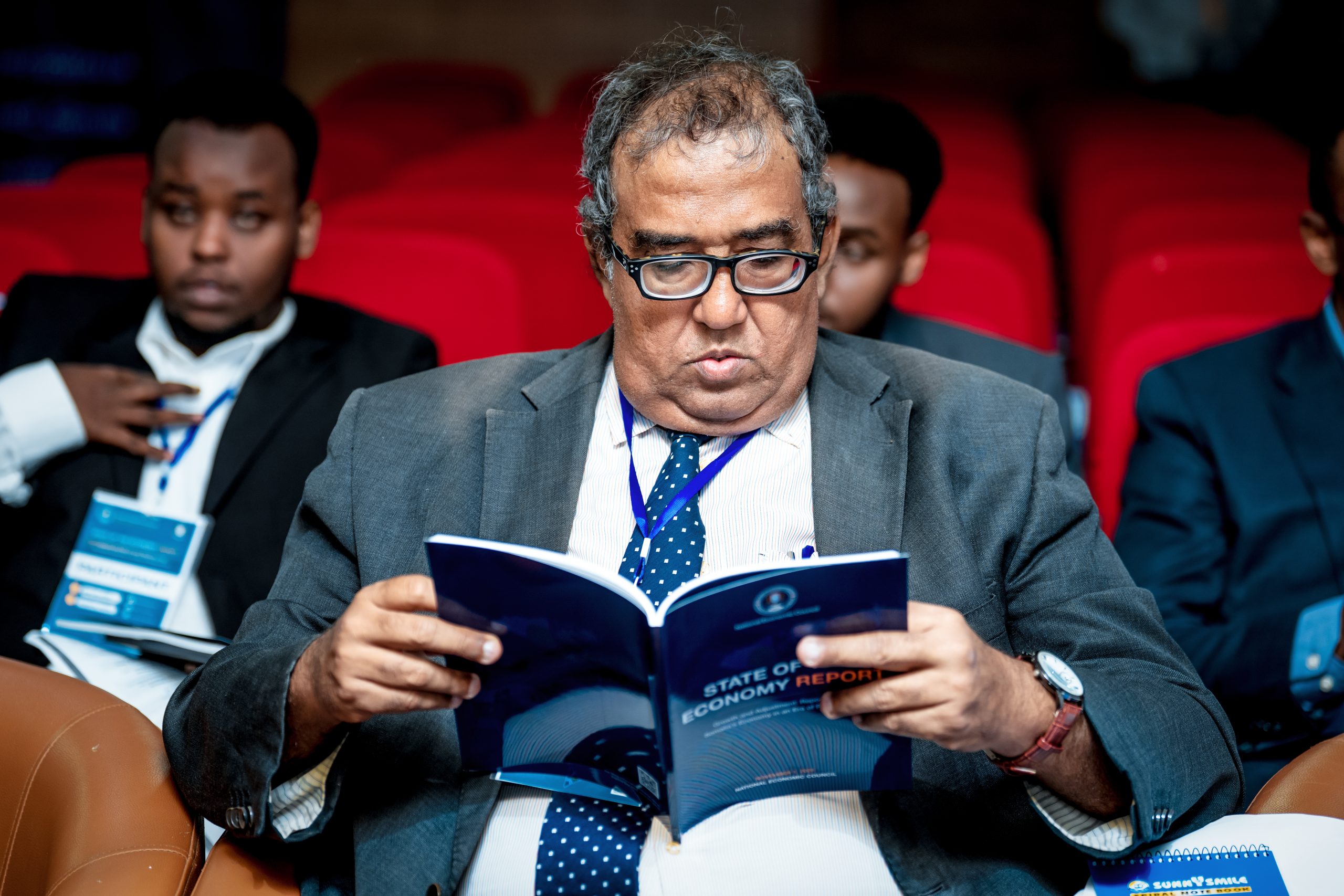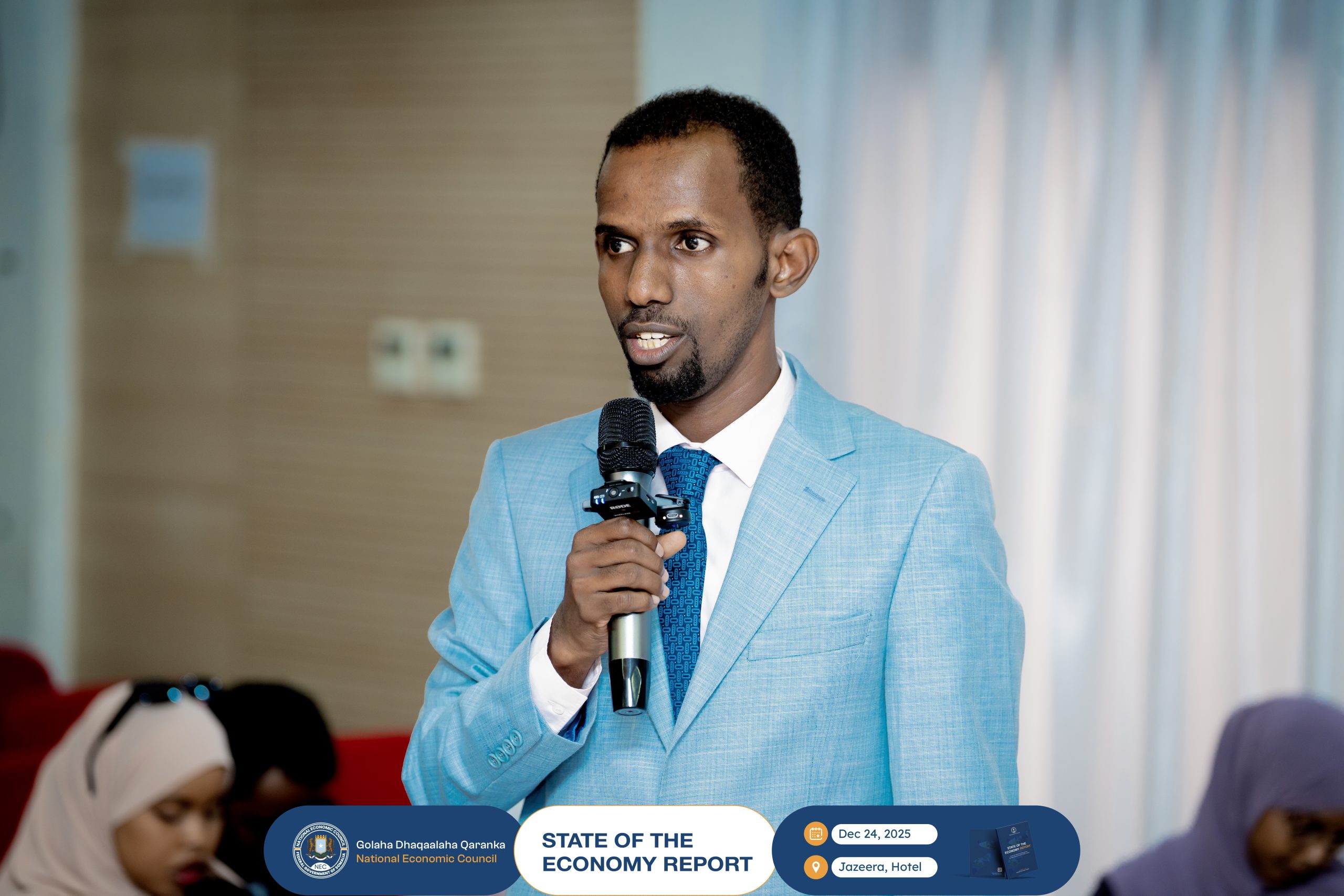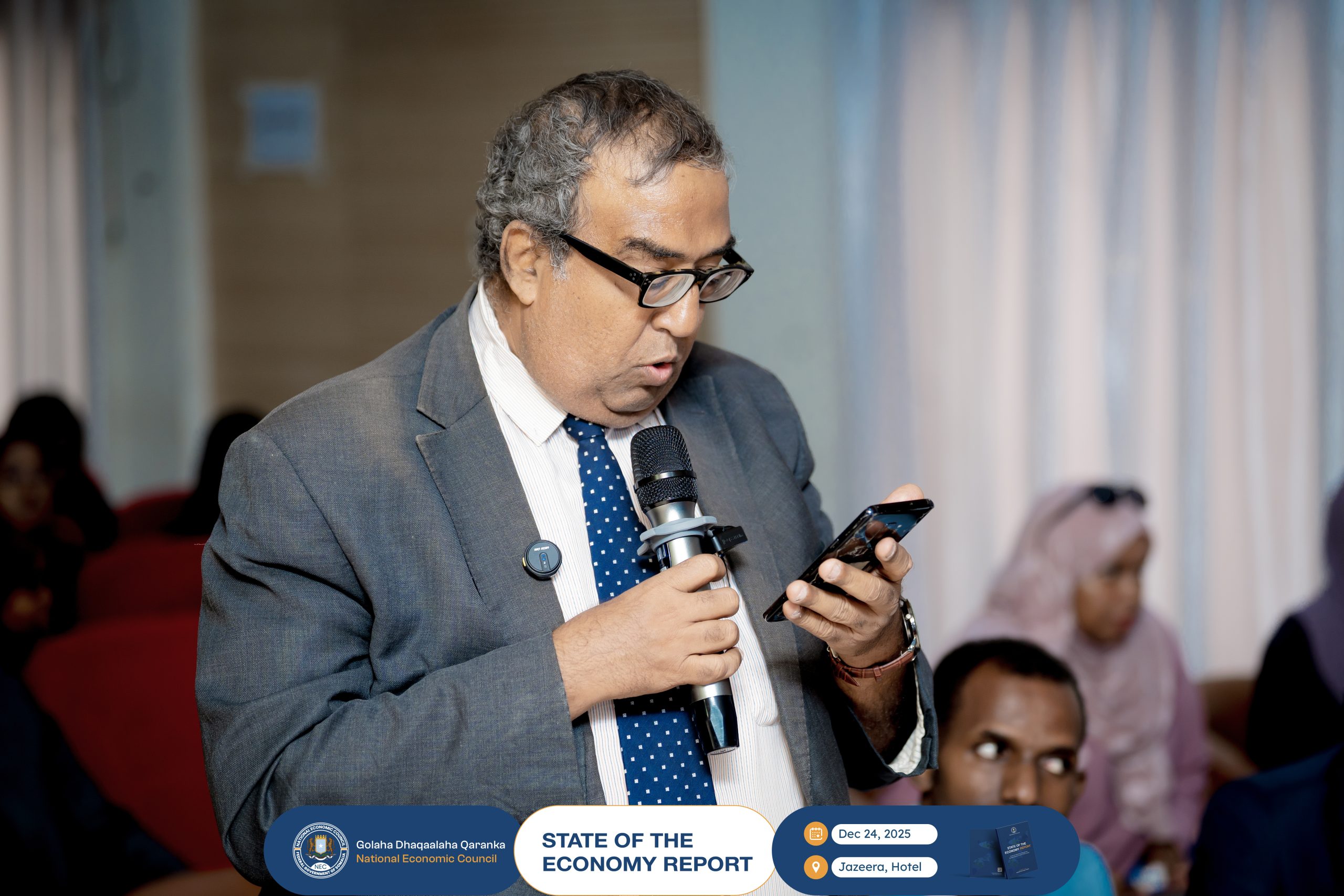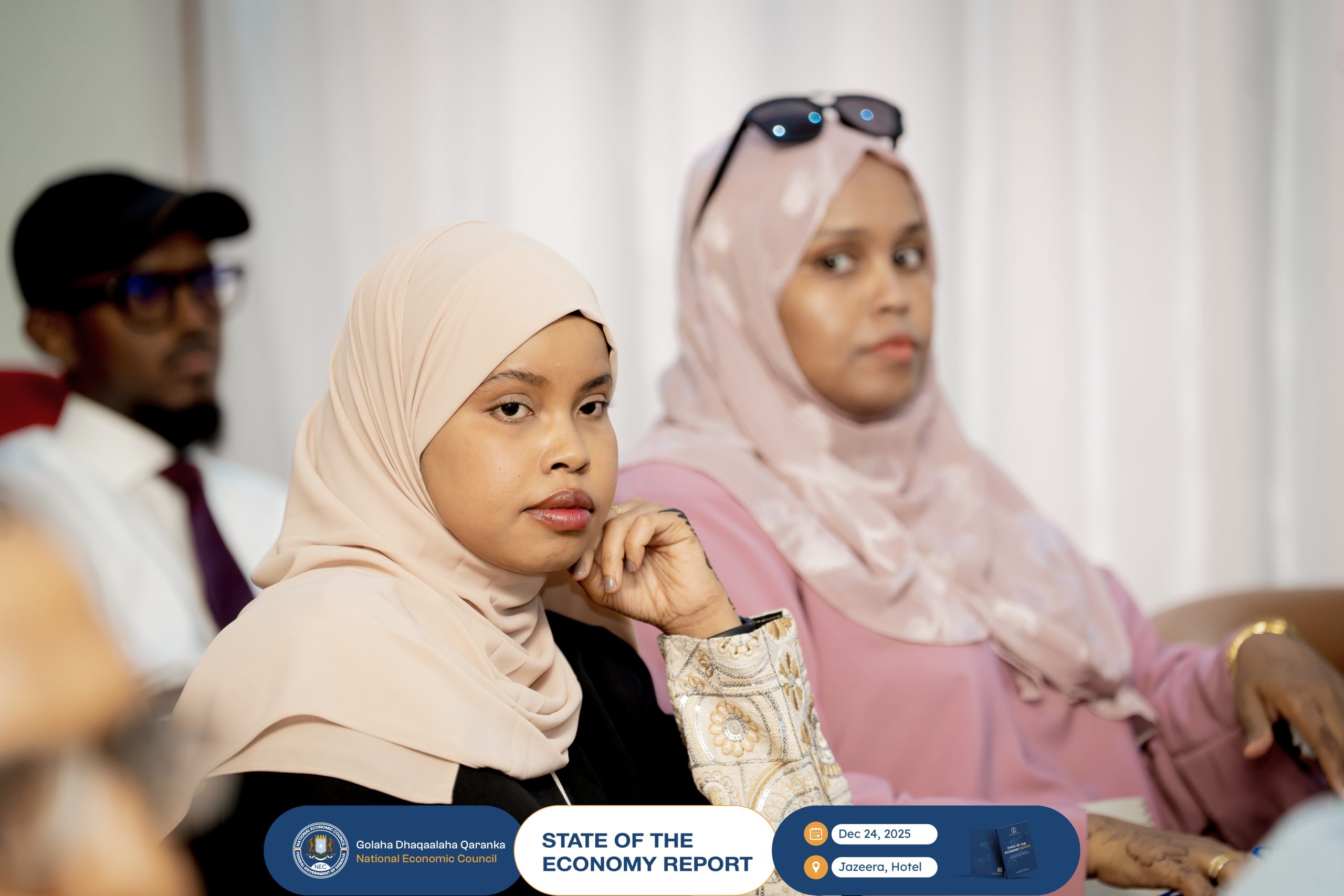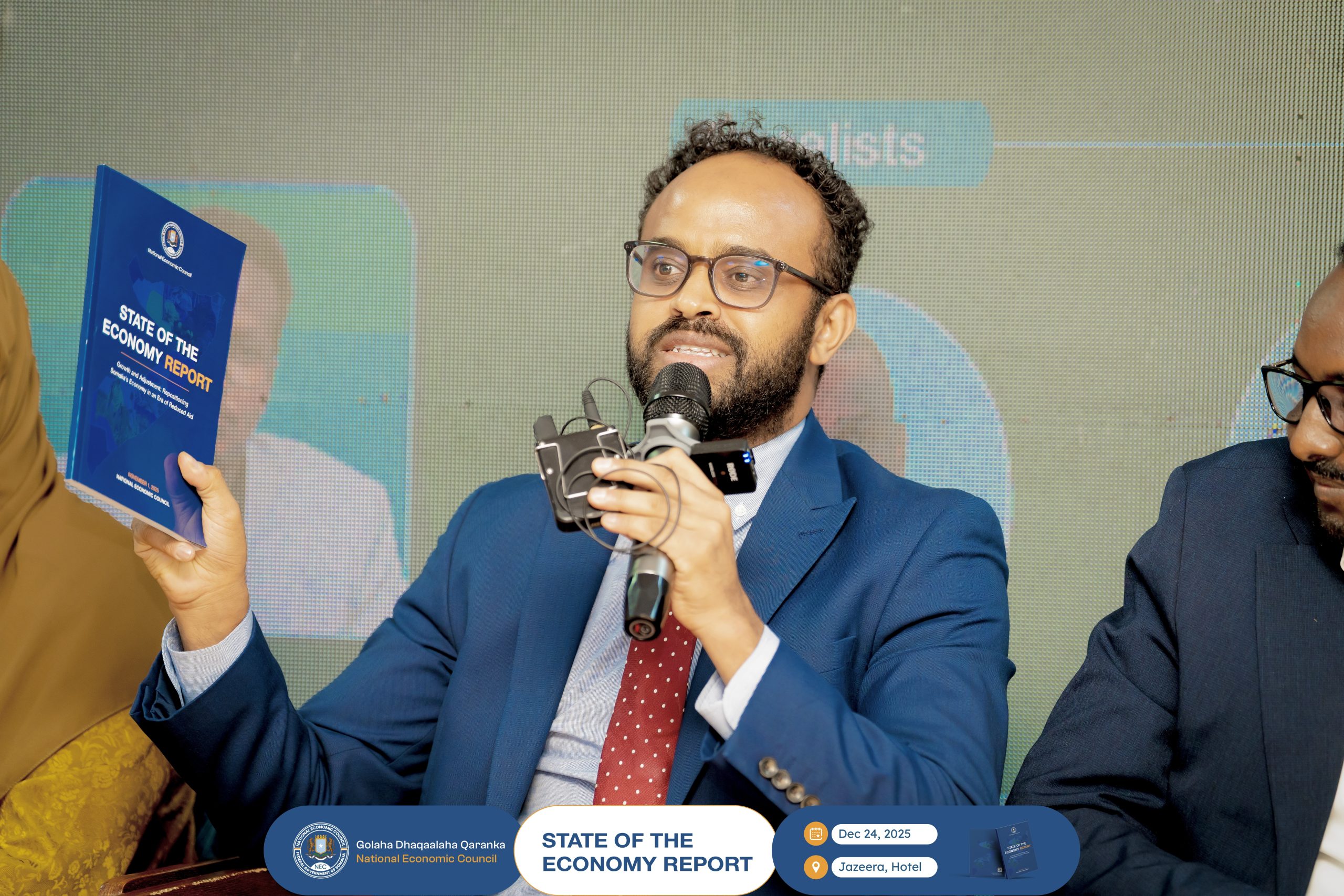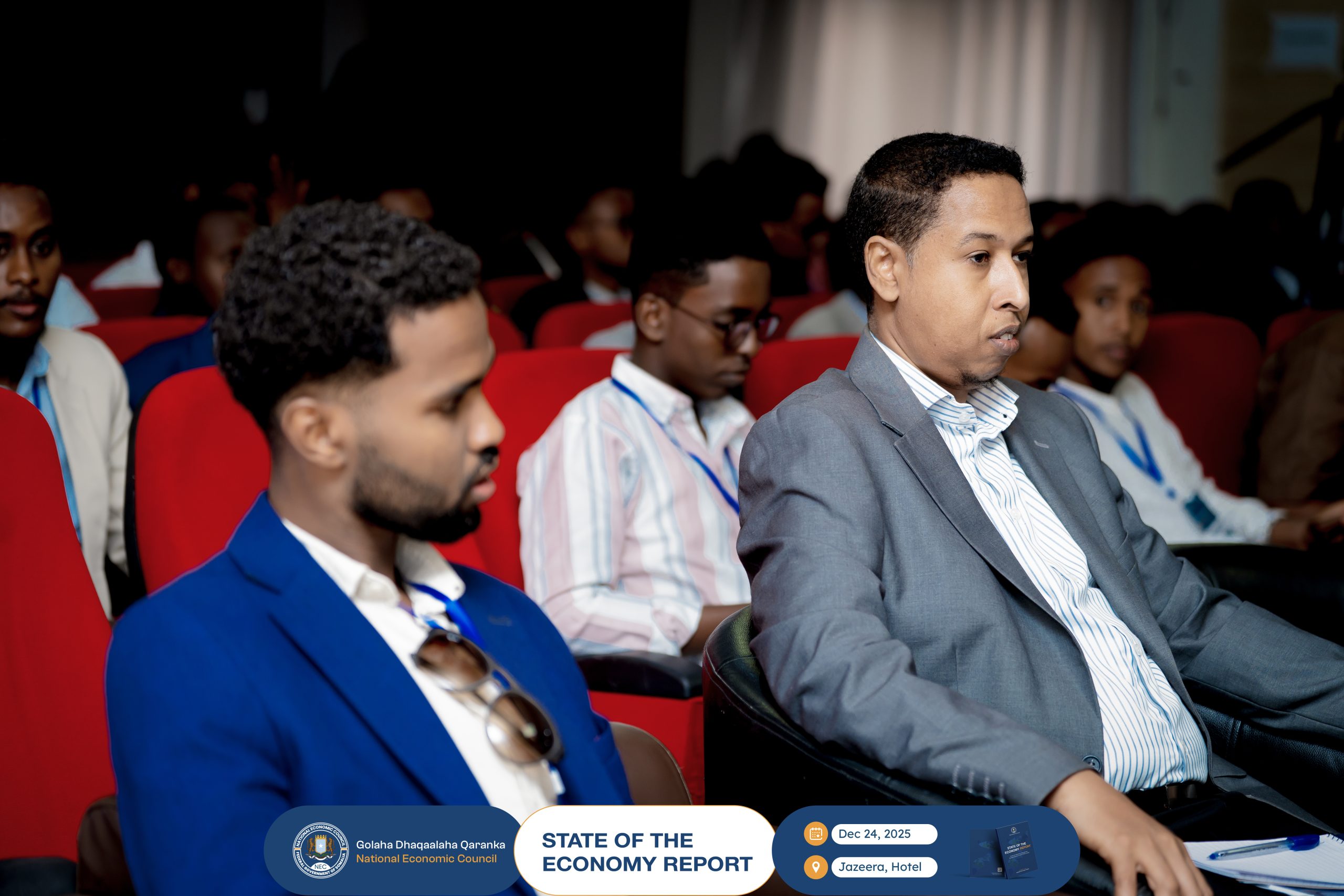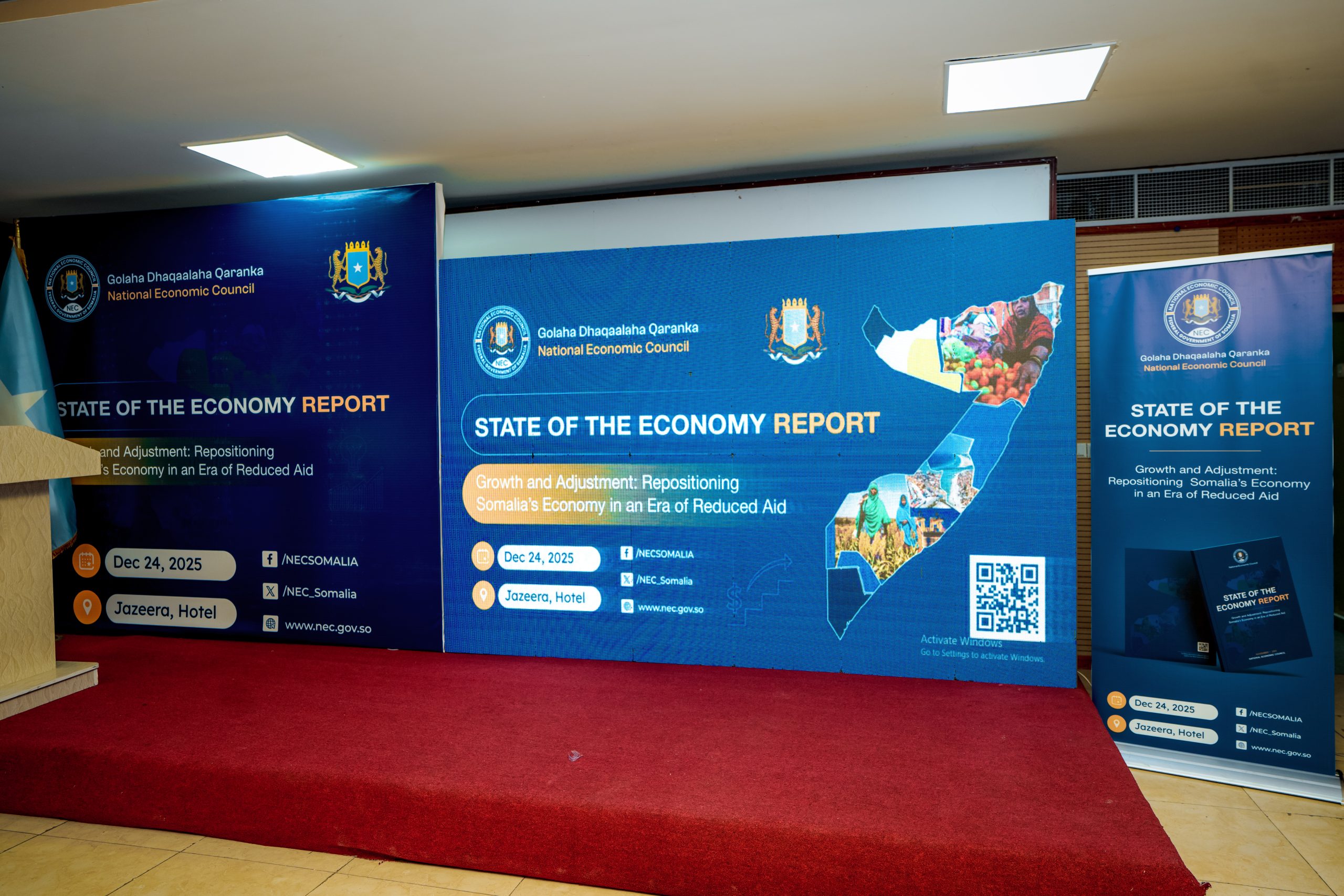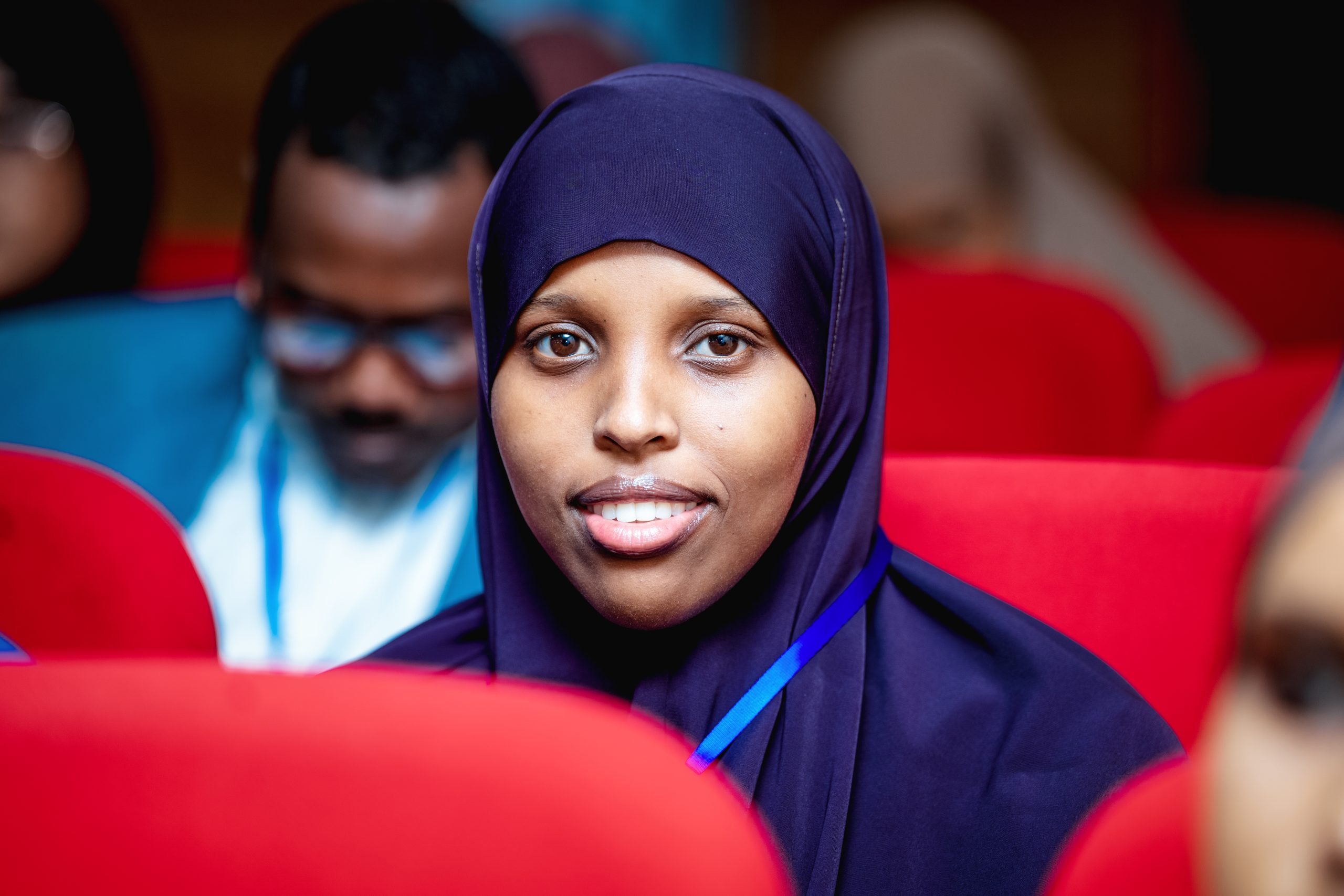

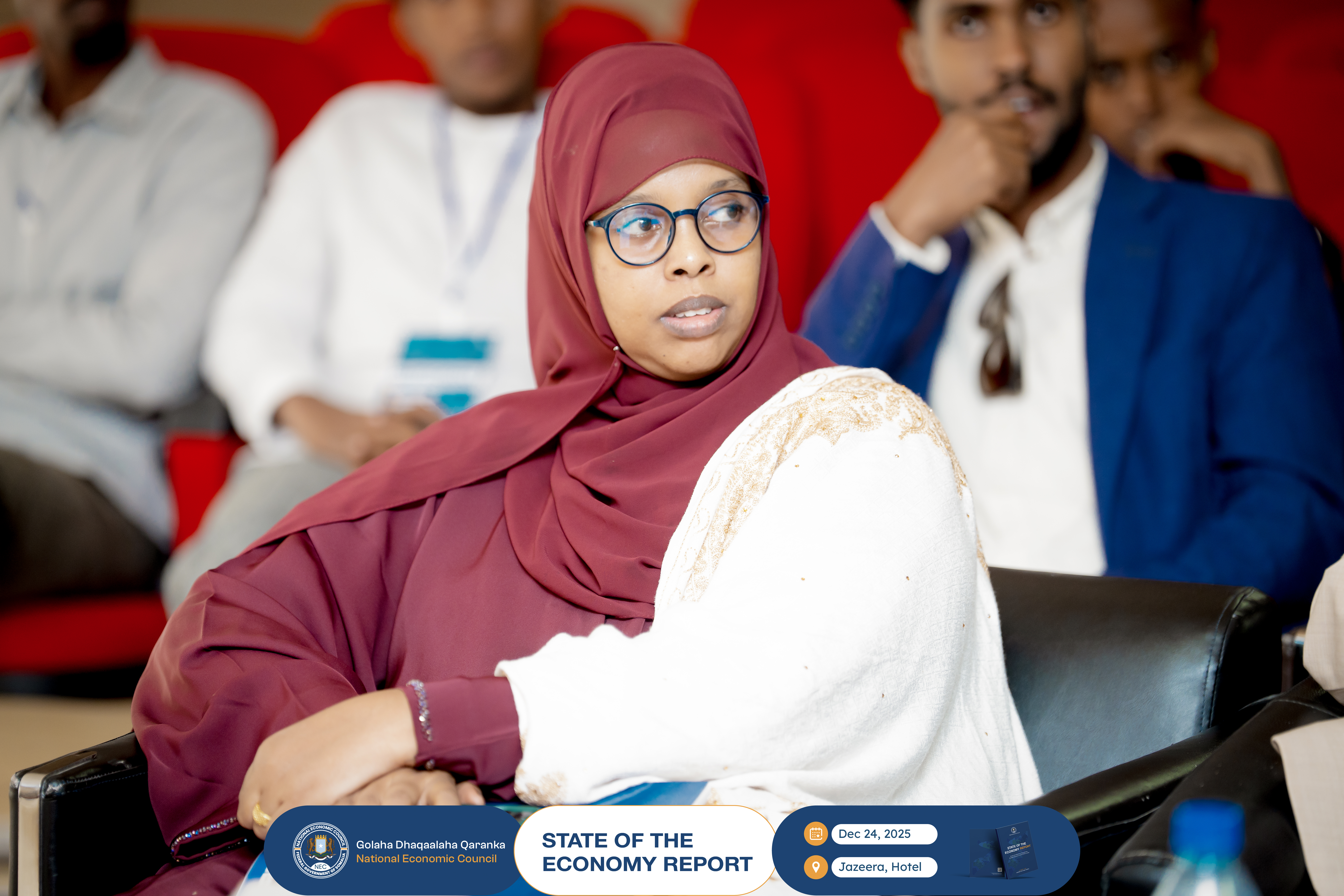
 Mogadishu, 24 December 2025 — The National Economic Council (NEC) convened a high-level dissemination event to launch the Third Edition of its flagship State of the Economy Report 2025 (SER2025) at the Jazeera Palace Hotel in Mogadishu. Held under the theme “Growth and Adjustment: Repositioning Somalia’s Economy in an Era of Reduced Aid,” the event brought together senior government officials, private sector leaders, development partners, civil society representatives, and economic experts.
The dissemination marked a significant milestone in Somalia’s economic policy journey. Now in its third consecutive year, the State of the Economy Report has become NEC’s flagship analytical publication, reflecting the Council’s growing institutional capacity and sustained commitment to Somali-led research, evidence-based policymaking, and national ownership of the economic narrative.
Opening Remarks
The event opened with remarks from Hassan Adam Hosow, Chief Economic Advisor to the President and Executive Director of the NEC. He welcomed participants and emphasized that SER2025 was produced entirely in-house by the NEC, underscoring the importance of national ownership in economic analysis and policy formulation.
Hosow noted that as Somalia enters a phase of reduced external assistance, the country must proactively chart its own economic course. He called for innovation, institutional resilience, and data-driven decision-making to support inclusive and sustainable growth
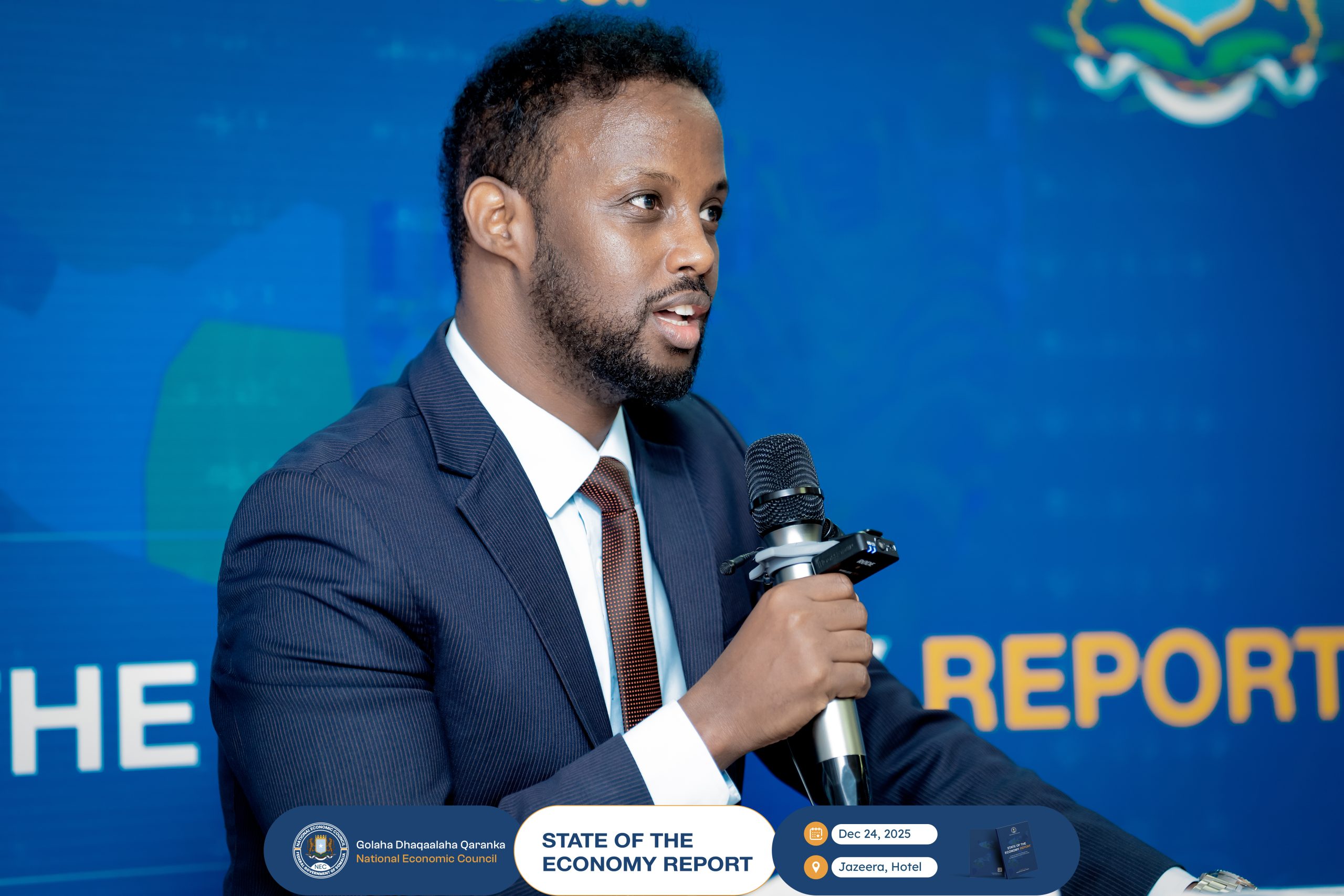
High-Level Reflections on Somalia’s Economic Transition
Keynote speakers provided strategic reflections on Somalia’s evolving economic landscape:
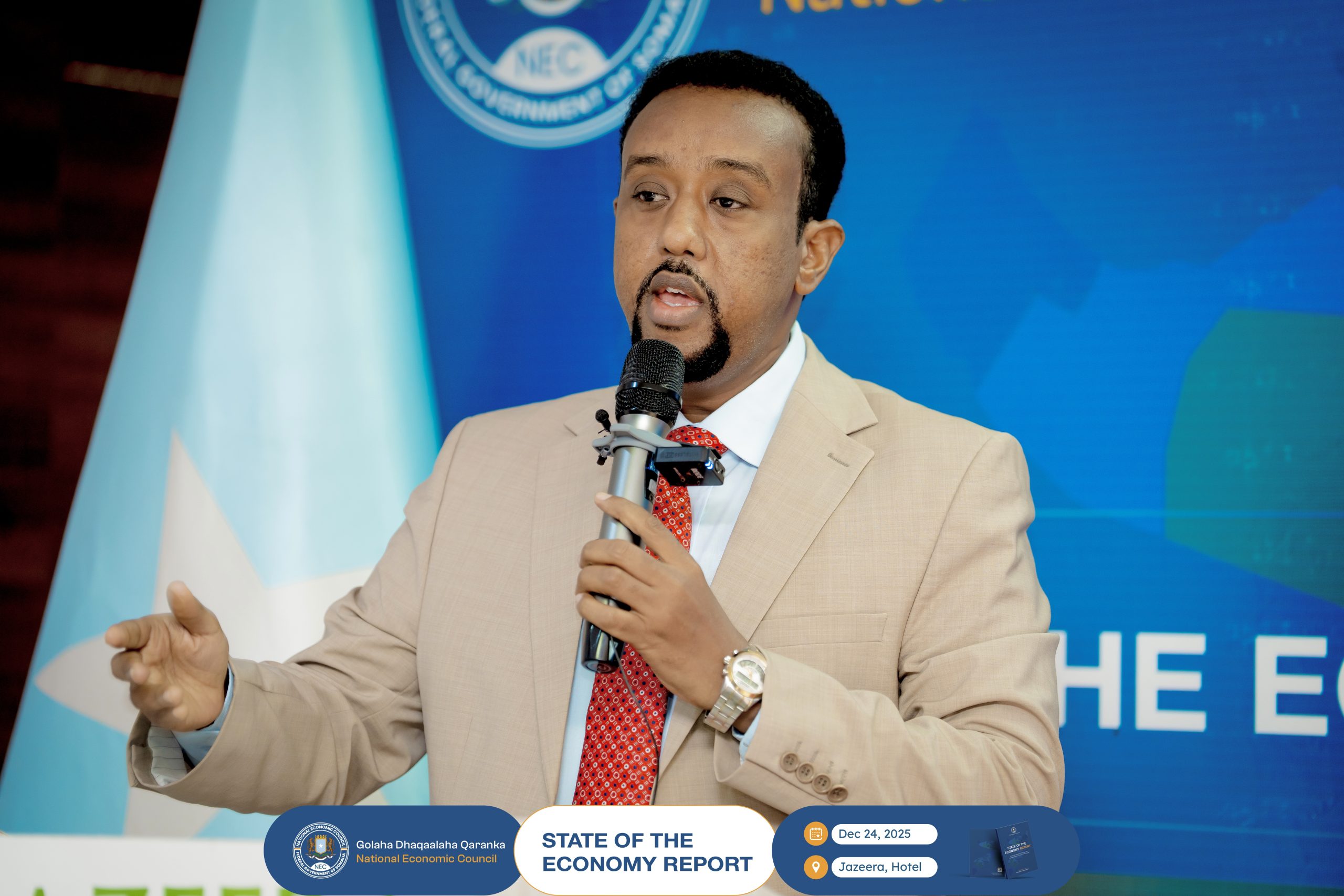
- Ahmed-Khadar Abdi Jama, CEO of the Somali Bankers Association, highlighted the long-standing role of remittances and aid in supporting the economy, while emphasizing the urgency of strengthening domestic investment, financial intermediation, and private sector leadership.
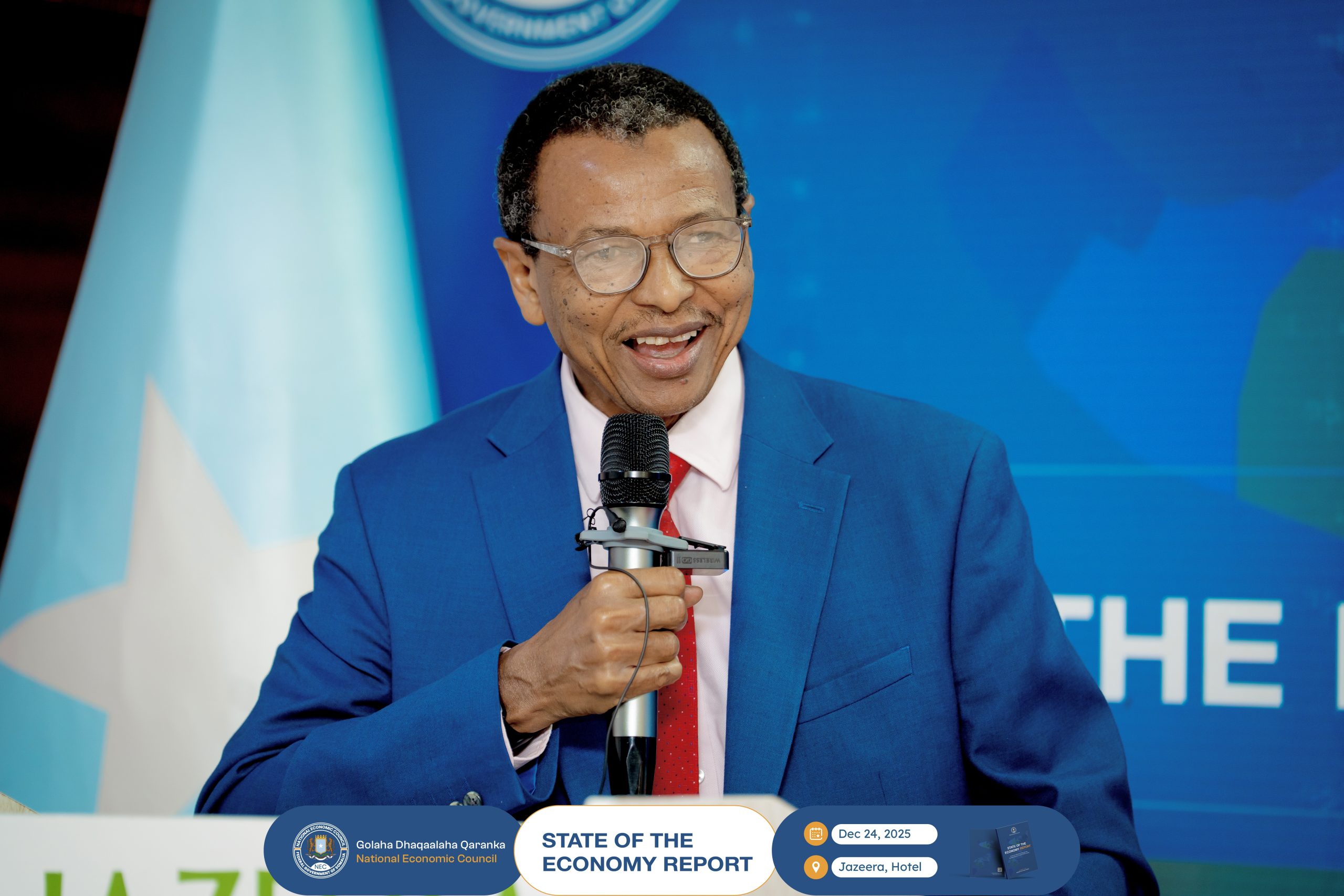
- El-Khidir Daloum, Acting Deputy Special Representative of the Secretary-General, Resident Coordinator, and Humanitarian Coordinator (DSRSG/RC/HC), reaffirmed the United Nations’ partnership with Somalia and stressed the importance of aligning economic reforms with inclusive development and the principle of Leaving No One Behind.
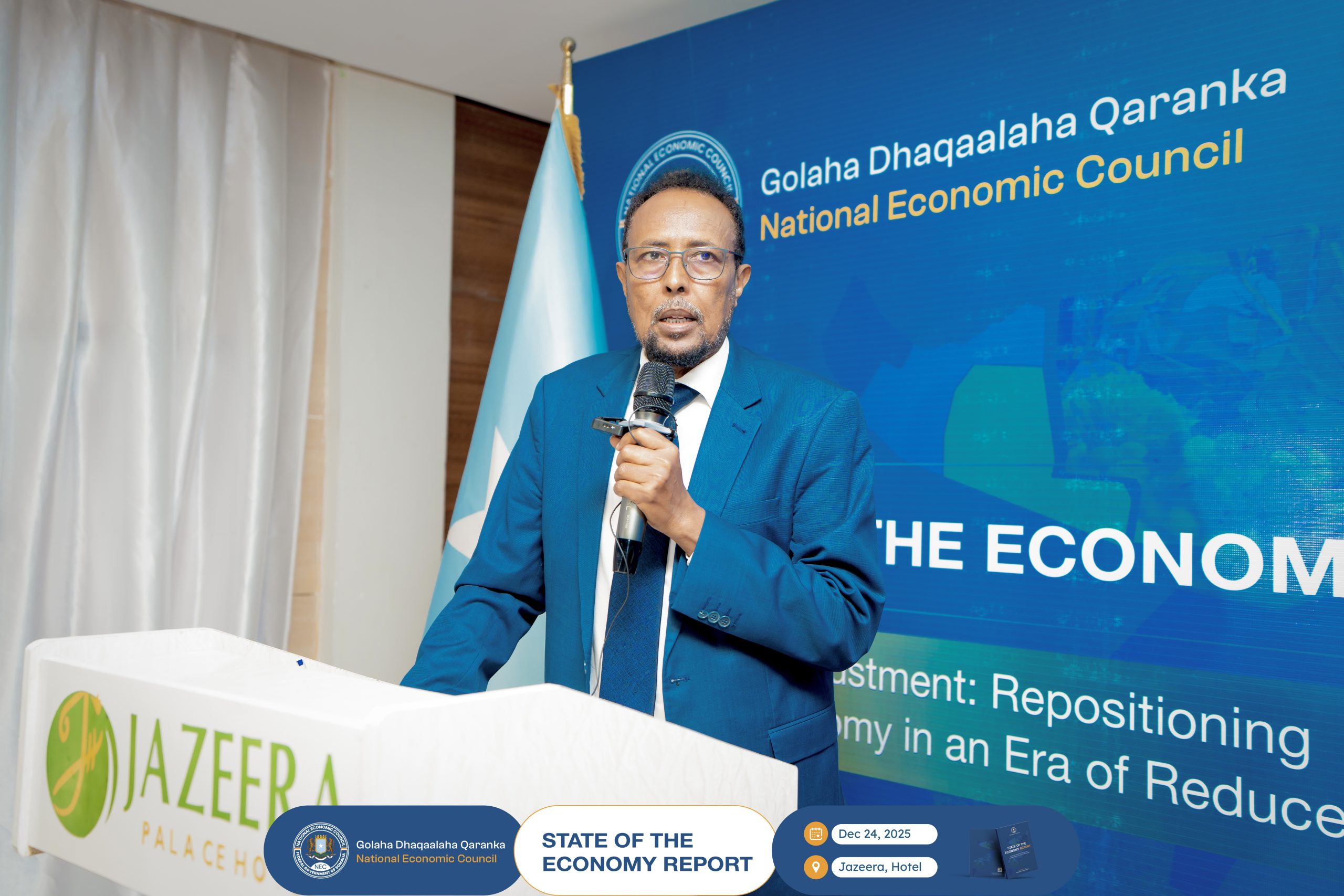
- Saleiman S. Umar, Director General at the Ministry of Finance, emphasized the relevance of the SER in guiding fiscal policy, economic diversification, and long-term macroeconomic resilience.
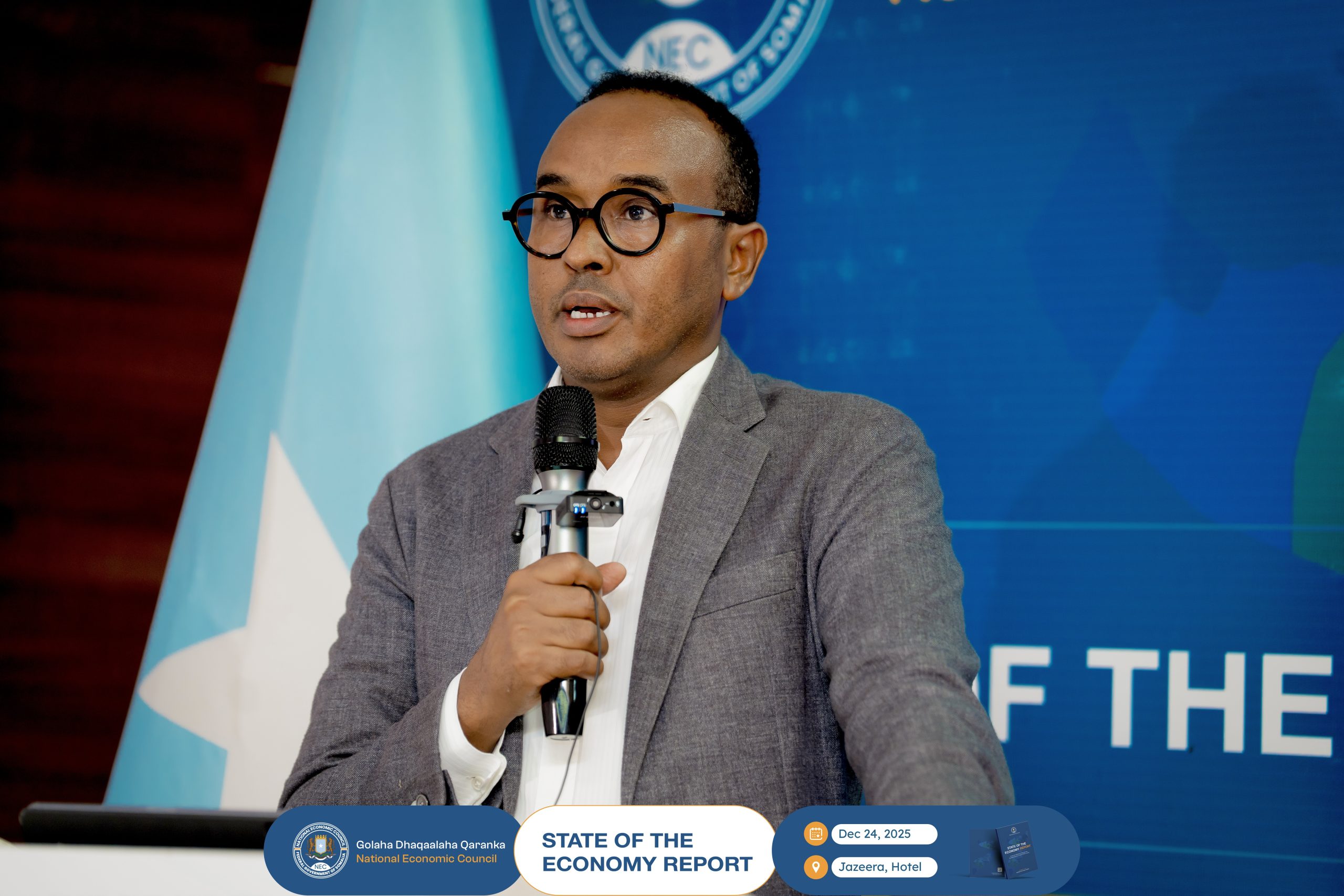
- Mohamud Moallim Abdulle, Commissioner of the Somali Disaster Management Agency (SoDMA), drew attention to the economic and social costs of recurrent droughts and climate shocks, calling for integrated and climate-resilient development planning.
Presentation of the State of the Economy Report 2025
The report was presented by Abdinur Ali Mohamed, National Economic Advisor at NEC, who outlined the evolution of the SER series and the core messages of the 2025 edition. He noted that while Somalia’s economy has shown gradual stabilization and recovery, it remains exposed to external shocks, including declining development assistance and global economic uncertainty.
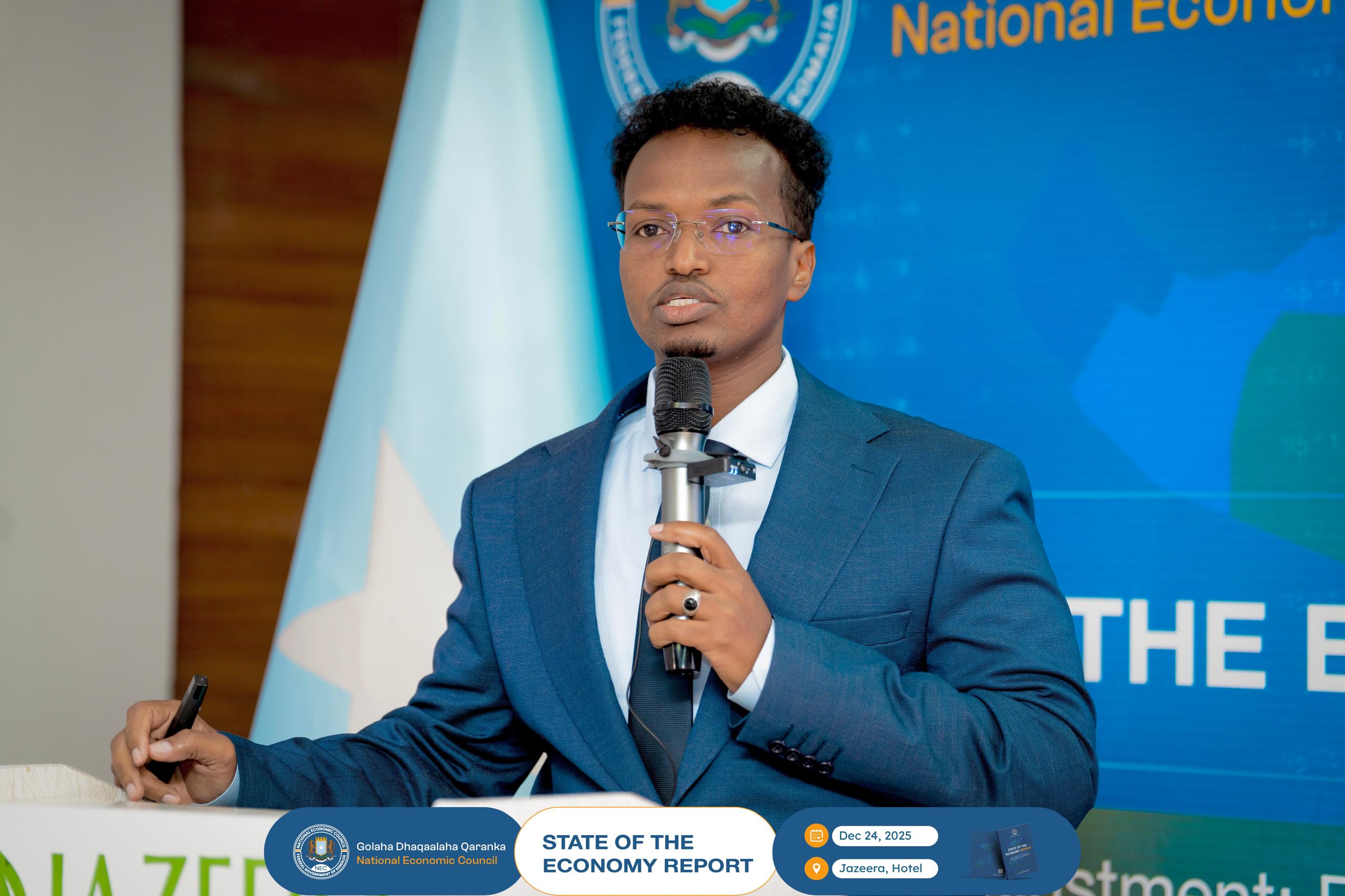
SER2025 highlights the need for accelerated economic adjustment through:
- Strengthening productive sectors such as agriculture, fisheries, and manufacturing
- Expanding domestic revenue mobilization through tax reform and digitization
- Promoting export diversification and infrastructure development
- Investing in human capital and social protection to advance inclusive growth
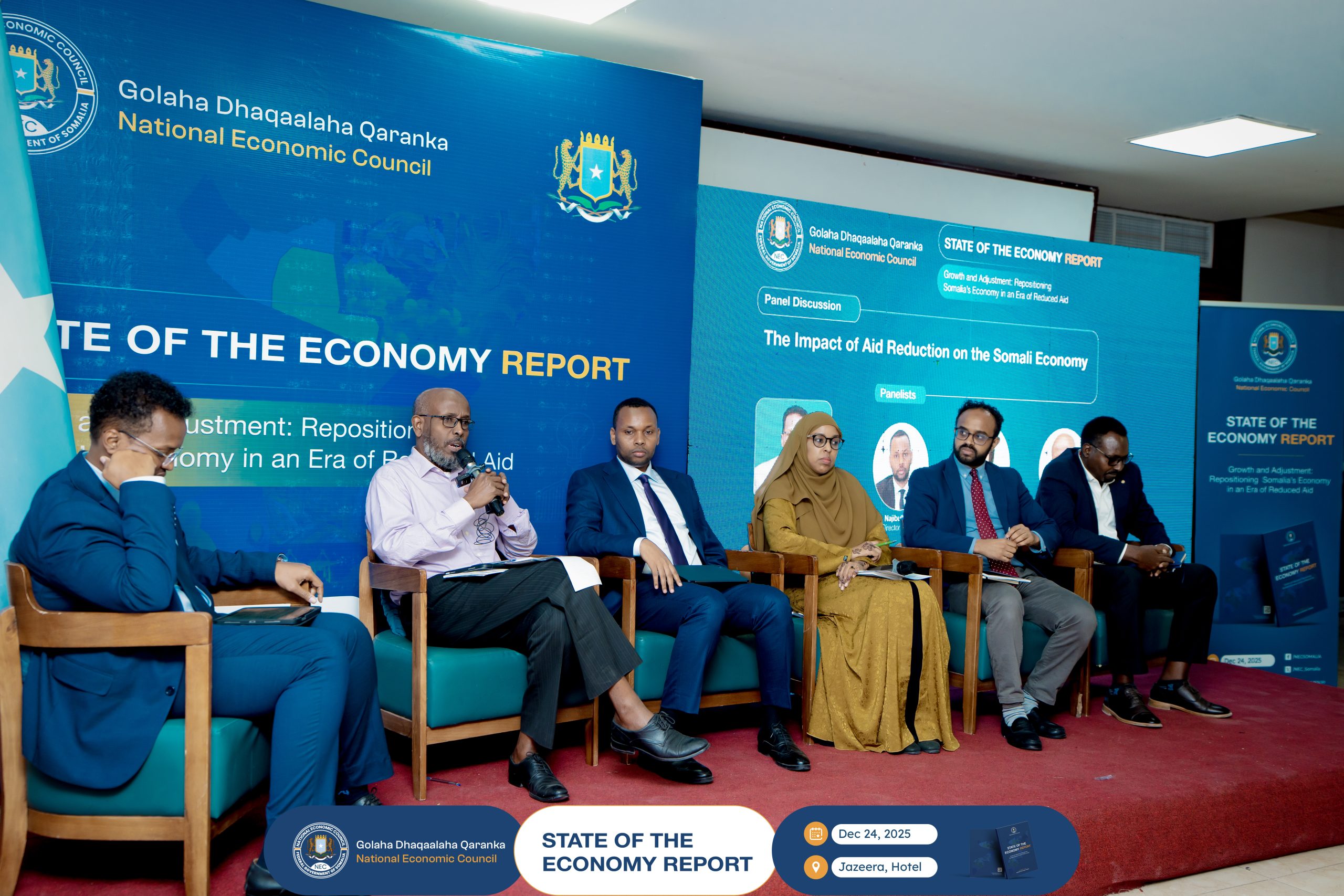
Panel Discussion: The Impact of Aid Reduction on the Somali Economy
A panel discussion moderated by Abdinur Ali Mohamed examined the implications of reduced aid and explored practical policy responses.
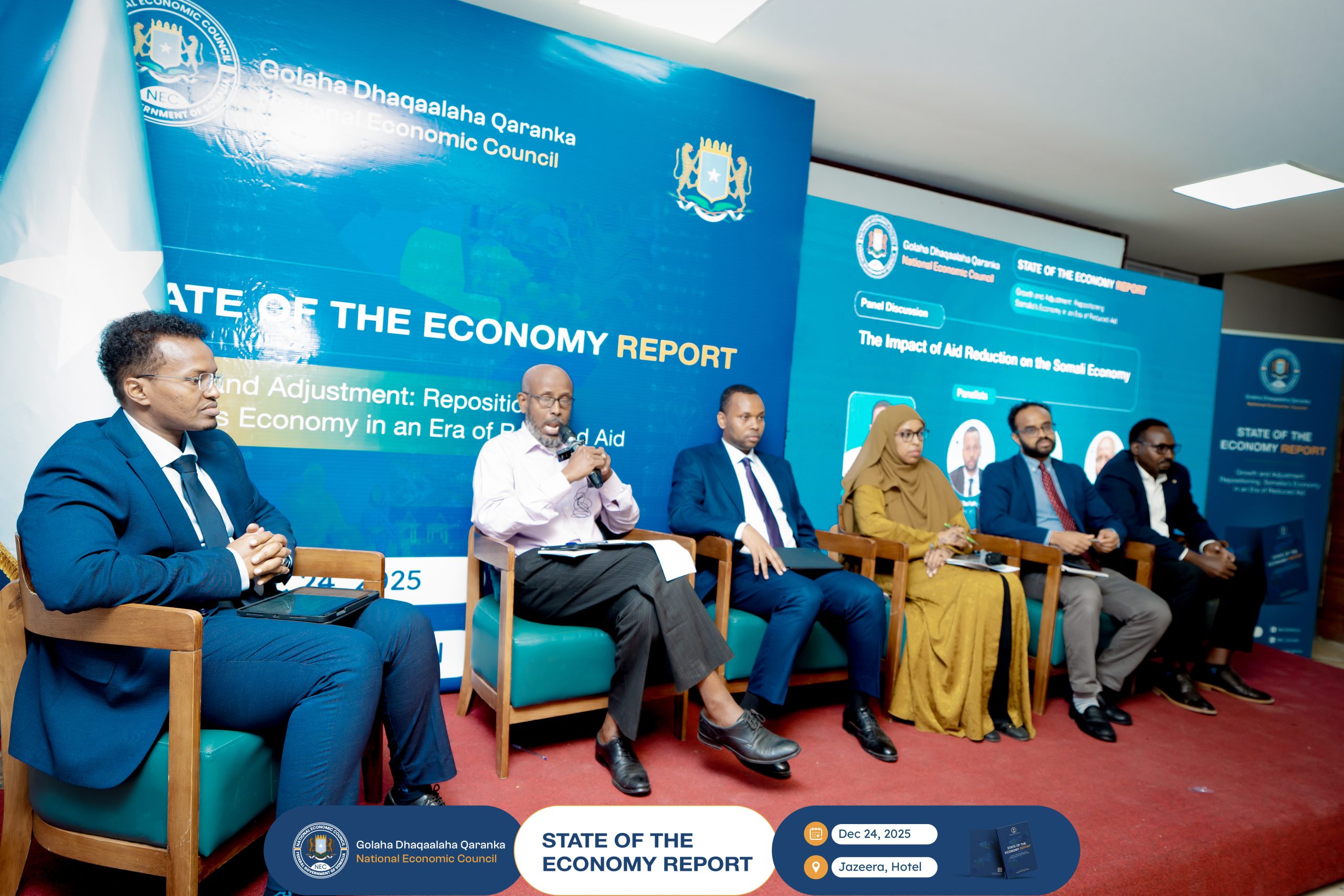
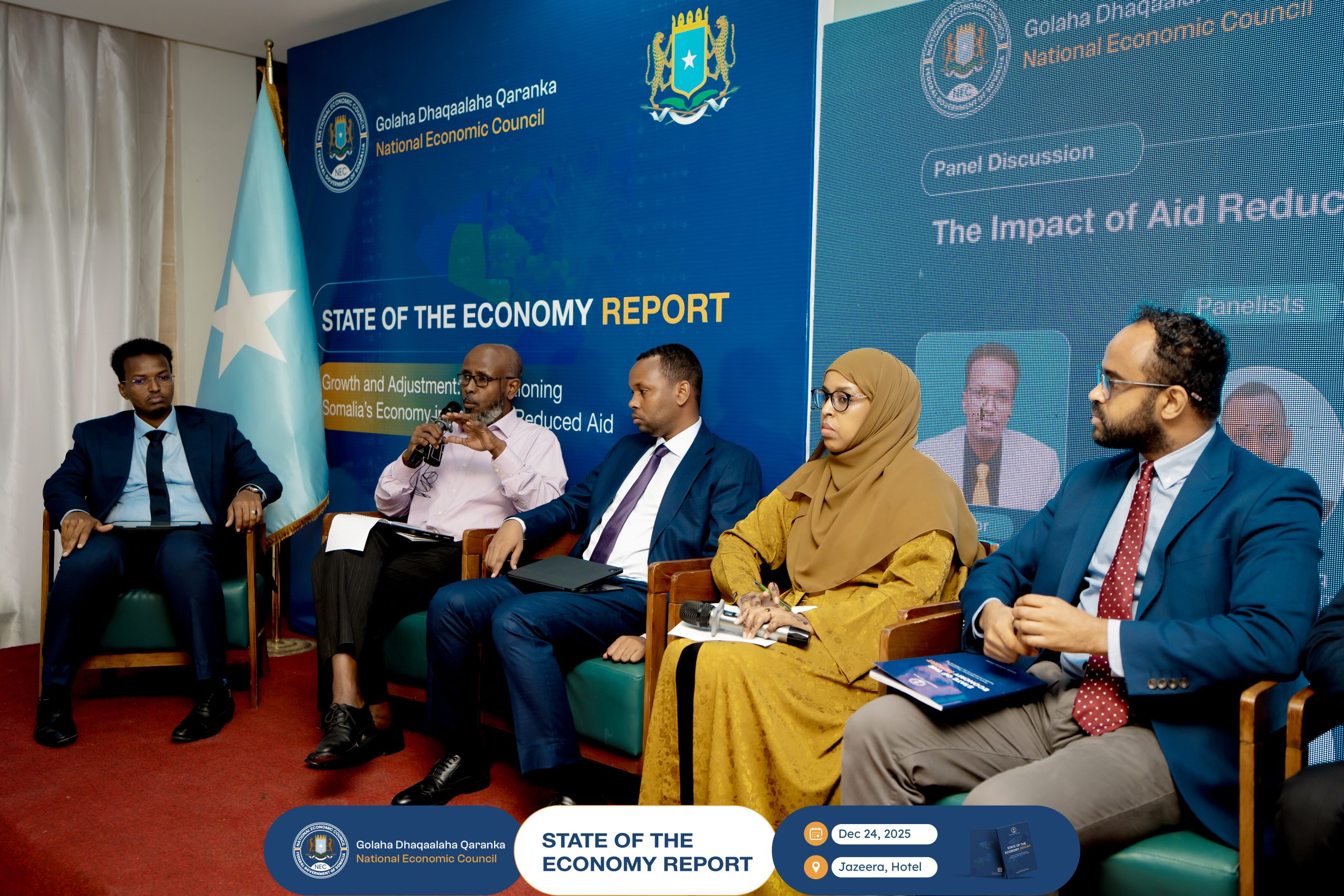
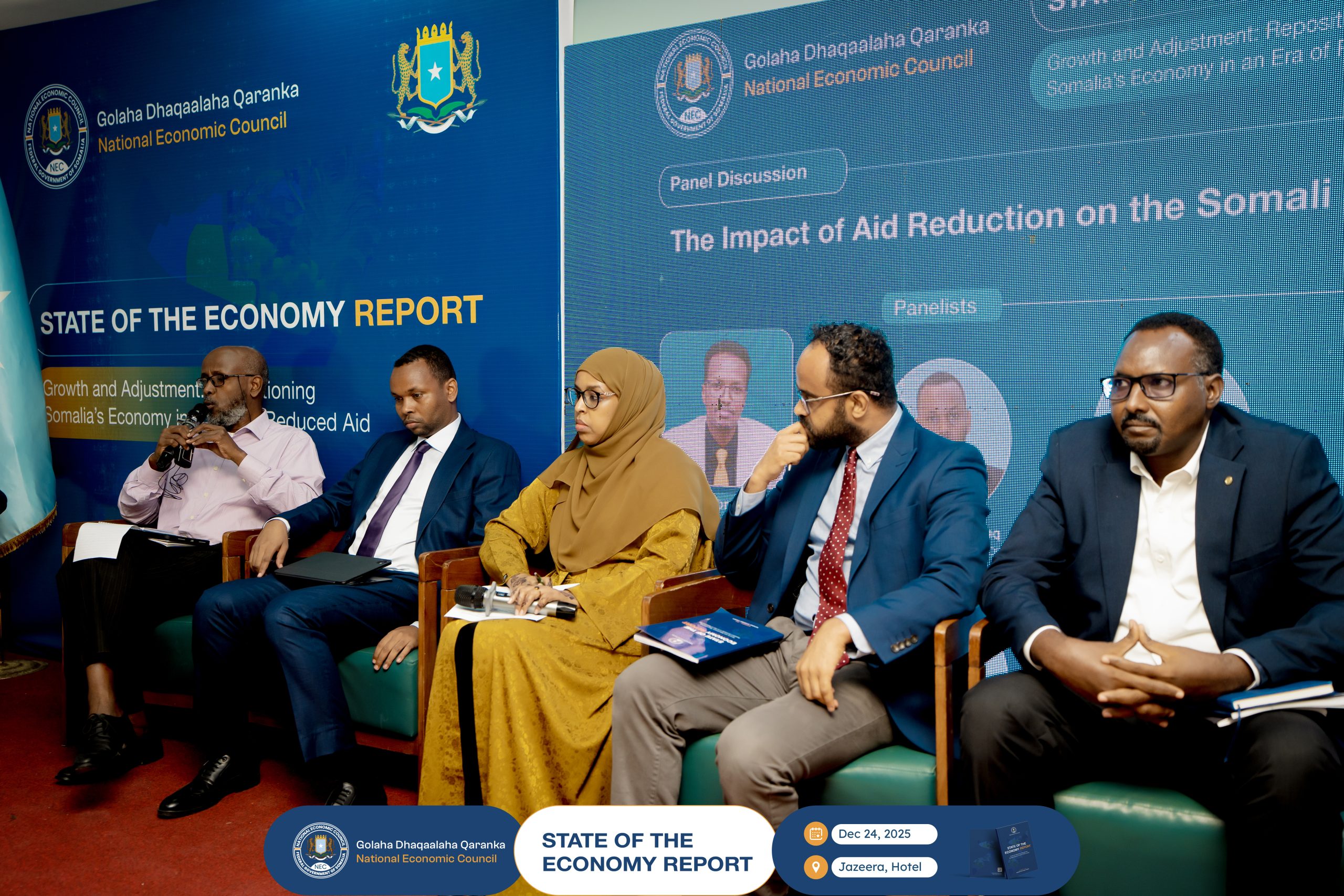
Panelists included:
Panelists emphasized transparent and equitable taxation, private sector-led growth, expanded domestic production, rural and irrigation development, and coordinated climate action as key pillars of economic resilience.
Key Outcomes
The event concluded with broad consensus on the following priorities:
- Strengthening national ownership of economic analysis and policymaking
- Accelerating economic diversification and domestic production
- Enhancing domestic revenue mobilization to reduce aid dependency
- Investing in public sector capacity, data, and institutions
- Integrating climate resilience and inclusivity into economic planning
Conclusion
In closing remarks, Hosow reaffirmed NEC’s commitment to Somali-led, evidence-based policymaking and called for sustained collaboration among government institutions, the private sector, and development partners to translate the report’s recommendations into action.
The launch of SER2025, NEC’s flagship economic report for the third consecutive year, reinforces the Council’s role as a central platform for informed economic dialogue and strategic leadership as Somalia advances toward a more resilient, inclusive, and self-reliant economy.